
7 Critical Signs Your Car Needs a Tow in Arlington TX — Don't Risk the Drive
Pulse Roadside Services Team
10 Oct 2024
8 min read
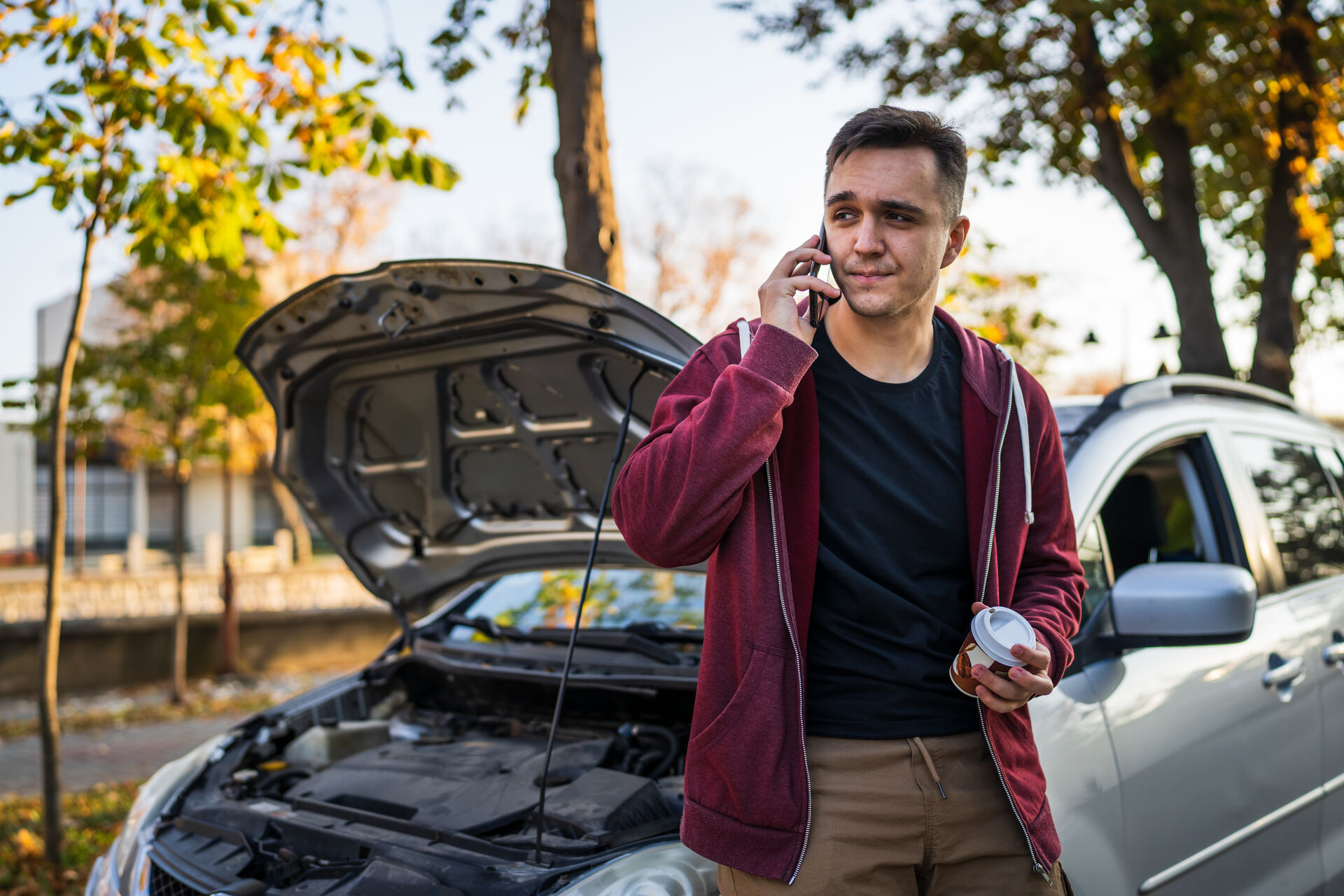
Every driver in Arlington has faced that moment of hesitation: your car is making a strange noise, or a warning light just came on, and you wonder, "Can I just make it home?" At Pulse Roadside Services, we've seen firsthand how that decision — to drive just a few more miles — can turn a $150 tow into a $3,000 engine replacement or worse.
Serving Arlington, Fort Worth, Grand Prairie, Mansfield, and all of Tarrant County, we respond to breakdowns every day where drivers kept going when they should have stopped. This guide will help you recognize the seven critical warning signs that mean you need to pull over immediately and call for professional towing service — not risk further damage by driving.
Why Arlington Drivers Should Never "Risk It"
Texas heat, stop-and-go traffic on I-20 and Highway 360, and the daily grind of commuting put serious stress on your vehicle. When a component starts failing, the conditions in Arlington can accelerate the damage quickly. What might seem like a minor issue — a little smoke, a strange sound — can escalate into catastrophic failure in minutes, especially in summer temperatures that regularly exceed 100°F.
Here's what we tell every caller who asks if they can make it home: if you're asking the question, the answer is probably no. Let's break down the specific signs that should always trigger an immediate call to Pulse Roadside Services at 1-877-47-PULSE.
1. Smoke or Steam Coming from Under the Hood
What it means: This is almost always one of three things — engine overheating (steam), coolant leaking onto hot exhaust components (white smoke), or oil burning due to a leak (blue-gray smoke). In rare but serious cases, it can indicate an electrical fire starting.
Why you absolutely should not drive: An overheating engine doesn't just inconvenience you — it warps the cylinder head, cracks the engine block, or blows the head gasket. These are not $200 fixes. We're talking $2,500 to $5,000 in repair costs, and in some cases, total engine replacement. Every additional mile you drive while the engine is overheating multiplies the internal damage.
On Arlington's summer roads, where pavement temperatures can hit 140°F, an overheating engine can seize completely in under five minutes of driving. We've towed vehicles where the owner tried to make it to the next exit — and ended up with an engine that will never run again.
What to do right now: Pull over to a safe location (parking lot, wide shoulder, side street), turn off the engine immediately, and do not attempt to open the hood until the engine has cooled for at least 20 minutes. Call Pulse Roadside Services, and we'll have a tow truck to your location in Arlington typically within 30 minutes.
2. Grinding, Knocking, or Metal-on-Metal Sounds
Warning sounds that demand immediate attention:
- Grinding from the wheels when braking: This means your brake pads are completely gone and the metal backing plate is grinding directly into the rotor. You're destroying the rotor with every stop, and brake failure is imminent.
- Knocking or tapping from the engine: Internal engine components (pistons, bearings, valves) are damaged and striking each other. This is catastrophic engine failure in progress.
- Squealing that doesn't stop: A serpentine belt is failing or a bearing (water pump, alternator, power steering) is seizing. When the belt snaps, you lose power steering, charging, and cooling all at once.
- Loud clunking when accelerating or turning: Drivetrain or suspension component failure — CV joint, U-joint, ball joint, or tie rod. These can separate completely, causing loss of control.
Why you should not drive: These sounds mean metal parts are physically destroying each other in real time. Every rotation of the wheel, every engine revolution, every gear shift is making the damage exponentially worse. What could have been a $400 brake job becomes a $1,200 brake job plus rotor replacement if you drive another five miles.
We tow vehicles every week in Arlington where the owner "just needed to get to work" — and turned a $600 repair into a $3,000 repair by driving on failing components.
What to do: Stop driving immediately. If you're on a highway like I-30 or Highway 360, get to the shoulder safely and call us. Pulse Roadside Services operates 24/7 across Tarrant County specifically for these emergency situations.
3. Burning Smell — Oil, Rubber, Electrical, or Chemical
Common burning smells and what they indicate:
- Burning oil smell (acrid, heavy): Oil is leaking onto the hot exhaust manifold or engine block. This can ignite.
- Burning rubber smell: Your clutch is slipping and overheating (manual transmission), or a belt is rubbing and about to snap.
- Electrical burning smell (sharp, plastic-like): Wiring insulation is melting, which can lead to electrical fire or complete electrical failure.
- Chemical or sweet smell: Brake fluid or coolant burning. If it's brake fluid, your brakes are overheating dangerously.
Why you should not drive: Fire risk is the most obvious danger, but even if no fire starts, the component that's burning is being destroyed. Burnt wiring can cause total electrical failure — no lights, no ignition, no power steering (electric systems), no instrument panel. You'll be stranded, possibly in a dangerous location like the middle of an Arlington intersection during rush hour.
Burnt brake fluid means your brakes are overheating, which causes brake fade — the pedal will start to feel soft and stopping distances increase dramatically. On Arlington's busy roads like Cooper Street or Collins Street, brake failure is a serious safety emergency.
What to do: Pull over immediately, turn off the engine, and exit the vehicle if you smell electrical burning or see smoke. Call 1-877-47-PULSE and let our dispatch team know you smell burning — we'll prioritize your call and get a truck to you fast.
4. Check Engine Light Is Flashing (Not Just Solid)
Understanding the difference: A solid check engine light means the vehicle's computer has detected an issue and stored a diagnostic code. This often can wait for a scheduled service appointment — it might be an oxygen sensor, an EVAP leak, or another non-critical issue.
A flashing check engine light is completely different. It means:
- The engine is misfiring severely (one or more cylinders are not firing)
- Unburned fuel is being sent into the catalytic converter
- The catalytic converter is actively overheating and being destroyed
- Continuing to drive will cause permanent, expensive damage
Why you should not drive: A catalytic converter replacement costs $1,500 to $3,000 depending on your vehicle. If you keep driving with a flashing check engine light, you're guaranteeing that expense. Worse, severe misfires can cause internal engine damage — cracked pistons, damaged valves, ruined cylinder walls.
We've towed countless vehicles in Fort Worth and Arlington where the owner saw the flashing light, kept driving "just to get home," and ended up with both a destroyed catalytic converter AND engine damage requiring thousands in additional repairs.
What to do: Stop driving immediately. A flashing check engine light is the vehicle's way of screaming "STOP!" Call Pulse Roadside Services, and we'll tow your vehicle to your preferred mechanic in Arlington or wherever you need it delivered.
5. Sudden Loss of Power Steering
What causes this: Modern vehicles use either hydraulic or electric power steering. Sudden loss means:
- Power steering pump failure (hydraulic systems)
- Serpentine belt broke (hydraulic systems)
- Power steering fluid leak (hydraulic systems)
- Electrical failure (electric systems)
What it feels like: The steering wheel suddenly becomes extremely difficult to turn, especially at low speeds or when stopped. You can technically still steer, but it requires significant physical force.
Why you should not drive: While you can mechanically turn the wheels, you may not have the strength to make emergency maneuvers — swerving to avoid a sudden obstacle, correcting a skid, or making a quick lane change on I-20 or Loop 12. In an emergency situation, you'll discover you cannot steer the vehicle safely.
Additionally, if the cause is a broken serpentine belt, you've also lost your alternator (battery will die soon) and water pump (engine will overheat soon). You're looking at multiple failures cascading rapidly.
What to do: If you're moving when this happens, slow down carefully, signal, and get to the shoulder or a parking lot. Do not attempt to drive in Arlington traffic without power steering. Call Pulse Roadside Services at 1-877-47-PULSE immediately.
6. Brake System Problems — Pedal to the Floor, Grinding, or Pulling
Critical brake warning signs:
- Brake pedal goes to the floor: Complete brake system failure — master cylinder failure or catastrophic fluid leak. You have no brakes.
- Grinding sound every time you brake: Pads are gone, metal is grinding metal, rotors are being destroyed.
- Vehicle pulls hard to one side when braking: Caliper seized, brake hose collapsed, or severe rotor warping. You cannot stop straight.
- Brake warning light illuminated: Low fluid, system malfunction, or ABS failure.
- Soft or spongy brake pedal: Air in the brake lines or fluid leak. Braking power is severely reduced.
Why you absolutely should not drive: This should be obvious — your ability to stop the vehicle safely is compromised or gone. On Arlington's busy streets like Division Street, Matlock Road, or anywhere near AT&T Stadium on game day, you need full, reliable braking power.
Brake failure isn't just about property damage (hitting another car, hitting a building). It's about the safety of you, your passengers, and every other driver, cyclist, and pedestrian on the road. There is no circumstance where it's acceptable to drive with brake problems.
What to do: If the pedal goes to the floor and you're moving, use the parking brake carefully to slow down (don't yank it — apply it gradually) and get stopped safely. Do not restart the vehicle. Call 911 if you're in immediate danger, then call Pulse Roadside Services to tow the vehicle.
7. Fluid Leaking Rapidly — Puddles, Streams, or Spraying
How to tell if it's serious: Small drips that take hours to form a small spot are usually okay to drive with briefly (though you should still get it checked). What's NOT okay:
- A puddle forming under your car within minutes of parking
- Fluid visibly dripping or streaming while the engine is running
- Fluid spraying onto the underside of the hood or onto the ground while driving
- A trail of fluid behind your car on the road
Quick fluid identification guide:
- Bright red or pink: Transmission fluid or power steering fluid (hydraulic systems)
- Bright green, orange, or pink (sweet smell): Engine coolant (antifreeze)
- Dark brown or black (slippery): Engine oil or very old brake fluid
- Clear or light yellow (slippery, chemical smell): Brake fluid or fresh power steering fluid
- Clear (just water): Air conditioning condensation — this is normal
- Gasoline smell: Fuel leak — fire hazard
Why you should not drive: If you're losing transmission fluid, the transmission will overheat and fail within miles — rebuilds cost $2,500 to $4,500. If you're losing coolant, the engine will overheat and suffer the damage described in Sign #1. If you're losing oil, the engine will seize from lack of lubrication. If you're losing brake fluid, your brakes will fail completely.
Any fuel leak is an immediate fire hazard. Gasoline vapors can ignite from exhaust heat, catalytic converter heat, or electrical sparks.
What to do: Turn off the engine immediately. If you smell gasoline, exit the vehicle and call 911 first, then call Pulse Roadside Services. For other fluid leaks, call us at 1-877-47-PULSE and describe what you're seeing — our team will advise you on the safest next steps.
The Real "Can I Make It?" Calculation for Arlington Drivers
We understand the temptation. You're five miles from home, or ten miles from your mechanic, or you really need to get to work. Here's how to think through the decision:
Ask yourself these questions:
- How far is my destination? Under one mile on surface streets might be survivable for some issues. Ten miles on Highway 360 at 70 mph is almost never worth the risk.
- What's the traffic situation? Driving with compromised brakes or steering during Arlington rush hour is exponentially more dangerous than driving at 2 AM on empty roads.
- What's the weather? Texas summer heat accelerates overheating. Rain reduces visibility and traction, making brake or steering issues more dangerous.
- Is it getting worse? If the sound is getting louder, the smoke is getting thicker, or the smell is getting stronger, it WILL fail completely soon.
- What's the worst-case repair cost if I keep going? A $125 tow versus a $4,000 engine replacement is not a difficult math problem.
Our honest advice: If you're asking yourself "Can I make it?", the answer is almost always no. At Pulse Roadside Services, we've never had a customer call us after their car broke down and say, "I wish I'd driven it further before calling for a tow." We've had hundreds say, "I should have called you sooner."
What Happens When You Call Pulse Roadside Services
Here's the process when you call 1-877-47-PULSE for emergency towing in Arlington or anywhere in Tarrant County:
- Immediate dispatch: Our team answers 24/7. You'll speak to a real person, not a voicemail system.
- Location confirmation: We'll pinpoint your exact location (we serve all of Arlington, Fort Worth, Grand Prairie, Mansfield, Euless, Bedford, Hurst, and North Richland Hills).
- Vehicle information: We'll ask about your vehicle make, model, condition, and the problem you're experiencing.
- Destination: Where do you need the vehicle towed? Your home, your mechanic, a dealership? We deliver anywhere in the metroplex.
- ETA commitment: We'll give you an honest arrival time estimate. For most Arlington locations, we're there within 30-45 minutes.
- Professional service: Our operators arrive with flatbed or wheel-lift trucks (depending on your vehicle and situation), load your vehicle safely, and transport it without additional damage.
Why Arlington and Tarrant County Trust Pulse Roadside Services
When your car is broken down on the side of Cooper Street or stranded in a parking lot off I-30, you need help fast — and you need it done right. Here's why local drivers call Pulse Roadside Services:
- True 24/7 availability: We answer calls at 3 PM and 3 AM with the same fast response.
- Tarrant County coverage: From Arlington to Fort Worth, Mansfield to North Richland Hills, we serve the entire county.
- Experienced operators: Our team handles everything from compact cars to heavy-duty trucks, classic vehicles to brand-new EVs.
- Transparent pricing: We'll quote you a price before dispatch — no surprise fees, no "mileage adjustments" when we arrive.
- Damage-free towing: We use proper equipment and techniques to protect your vehicle during transport.
- Your destination choice: We tow to wherever you need — your driveway, your trusted mechanic on South Cooper, a dealership in Fort Worth, or even out of state if necessary.
Additional Services When You Need More Than Just a Tow
Sometimes the problem isn't serious enough for a tow — you just need a quick fix to get moving again. Pulse Roadside Services also offers:
- Jump starts: Dead battery? We'll get you started and test the battery and alternator.
- Flat tire assistance: We'll swap your flat for your spare safely and quickly.
- Fuel delivery: Ran out of gas? We'll bring fuel to you.
- Lockout service: Locked your keys in the car? We'll get you back in without damage.
Not sure what you need? Call us anyway. Our team will help you figure out the best solution — whether that's roadside assistance or a tow to a repair facility.
Don't Turn a Minor Problem Into a Major Expense
The cost of a tow in Arlington typically ranges from $100 to $200 depending on distance. Compare that to:
- Engine overheating damage: $2,500-$5,000
- Transmission failure from driving with low fluid: $3,000-$4,500
- Catalytic converter replacement from ignoring a flashing check engine light: $1,500-$3,000
- Brake system damage from driving with grinding brakes: $800-$1,500
Every single week, we tow vehicles in Arlington where the owner tried to save the cost of a tow — and ended up with repair bills ten times higher than what the tow would have cost.
We're Ready When You Need Us
Pulse Roadside Services operates around the clock, every day of the year, serving Arlington, Fort Worth, Grand Prairie, Mansfield, and all of Tarrant County. If you see any of the seven warning signs in this article — or any other serious car problem — don't risk it.
Call 1-877-47-PULSE immediately. Our team will dispatch a tow truck to your location, transport your vehicle safely, and get you off the roadside and out of danger. We're here to help Arlington drivers 24/7 — no question is too small, no breakdown too minor to call about.
Stay safe, and remember: when in doubt, don't drive it out. Call Pulse Roadside Services.